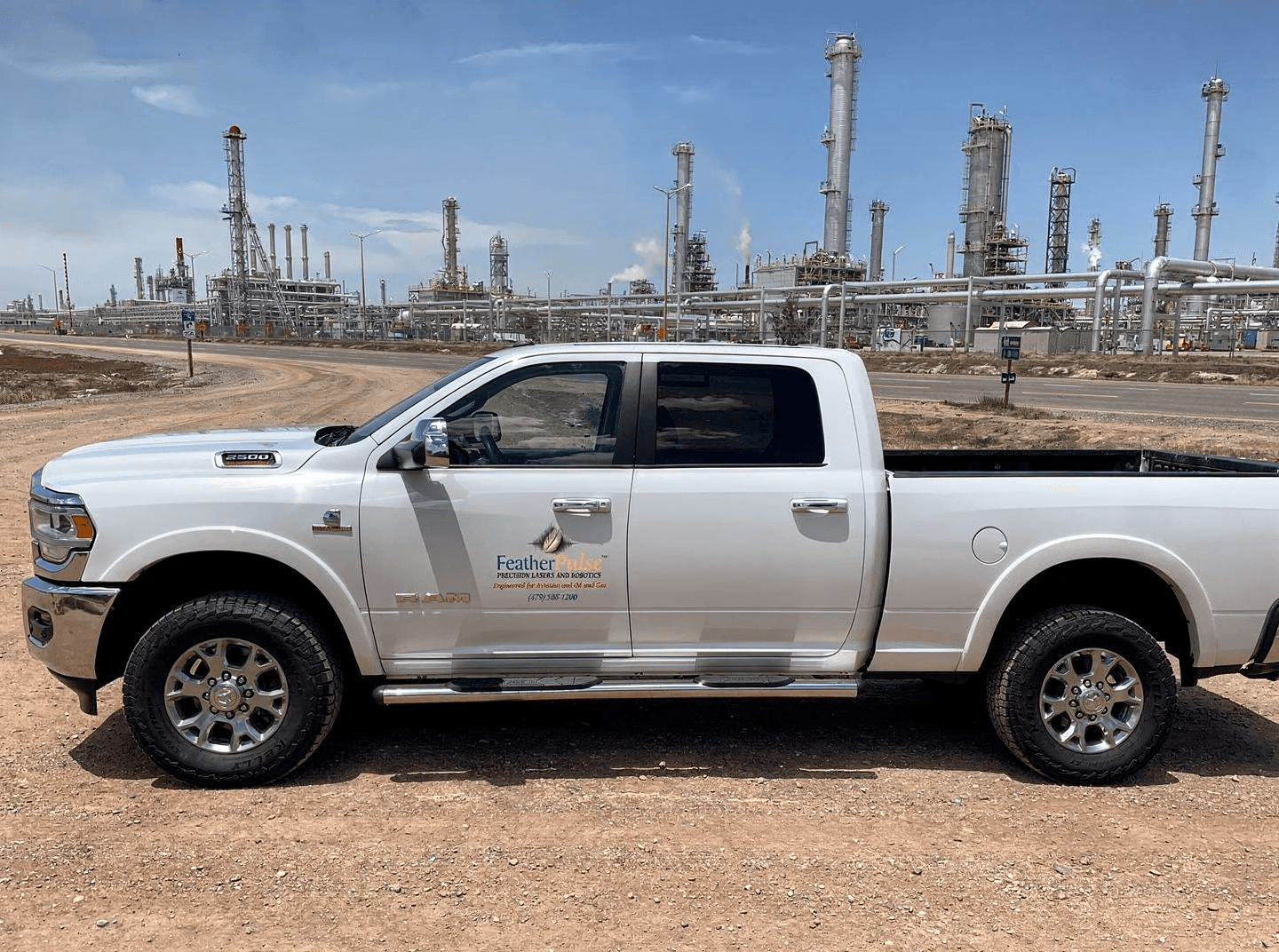
Pipeline & Infrastructure Maintenance
Strip corrosion, scale, wax, and coatings from pipelines, platforms, and refinery equipment — without chemicals, water, abrasive media, or multi-day shutdowns. One operator, one machine, no hazardous waste stream.
The problem
Oil & gas infrastructure faces continuous degradation from:
- Corrosion — responsible for 65% of global pipeline failures
- Scale formation — reducing effective pipe diameter by up to 40%
- Wax deposition — particularly problematic in subsea pipelines
- Marine growth — fouling offshore infrastructure
- Chemical contamination — H₂S, CO₂, and other corrosive agents
Traditional maintenance — chemical treatment, mechanical abrasion, abrasive blasting — drives 3–5 day production shutdowns per cleaning cycle and generates more than 50,000 tons of hazardous waste annually in the U.S. alone. Workers face exposure to toxic chemicals and silica dust. Secondary environmental contamination is routine.
The FeatherPulse approach
A pulsed fiber laser selectively ablates the contamination layer — rust, scale, wax, coating — without damaging the underlying steel. The contaminant vaporizes; the base metal stays intact and cool. The result is a clean surface ready for inspection, recoating, or return to service, with:
- Zero chemical consumption
- Zero water consumption
- Zero abrasive media
- A hazardous-waste stream that essentially disappears
- Cleaning time measured in hours instead of days
What gets cleaned
- Pipeline interiors and exteriors (rust, scale, coating)
- Offshore platform structural members (salt deposits, marine growth, coating)
- Heat exchangers, storage tanks, distillation columns, pressure vessels
- Weld preparation surfaces and NDT inspection zones
Why it scales across an asset base
The same FP-300 system that strips paint from an aircraft wing in the morning can be in a refinery turnaround stripping coating from a pressure vessel in the afternoon. The MOPA fiber laser architecture lets a single operator dial pulse duration, frequency, and power to match the contamination and substrate in front of them — no separate equipment for each task.
Read on: the next card covers the technical parameters, performance metrics, regulatory alignment, and illustrative deployment scenarios.
Related Technologies
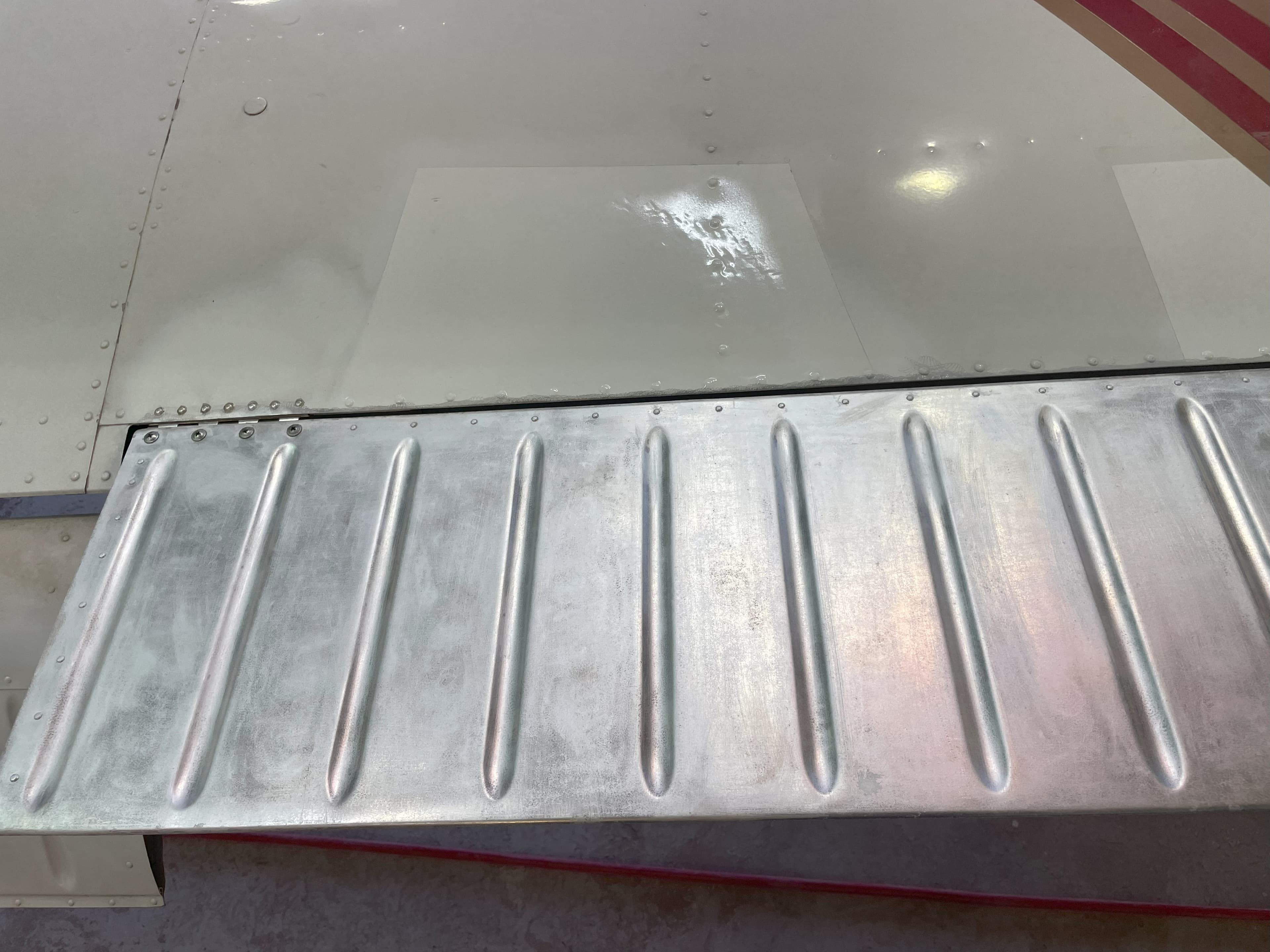
Aircraft Paint, Corrosion & Rivet-Area Restoration
Strip primer, topcoat, and corrosion from aluminum control surfaces, expose hidden damage around rivet lines, and clear surfaces for IA inspection — without media, chemicals, or fretting-fatigue risk. Validated against the 6 J/cm² substrate-damage threshold.
Explore Technology →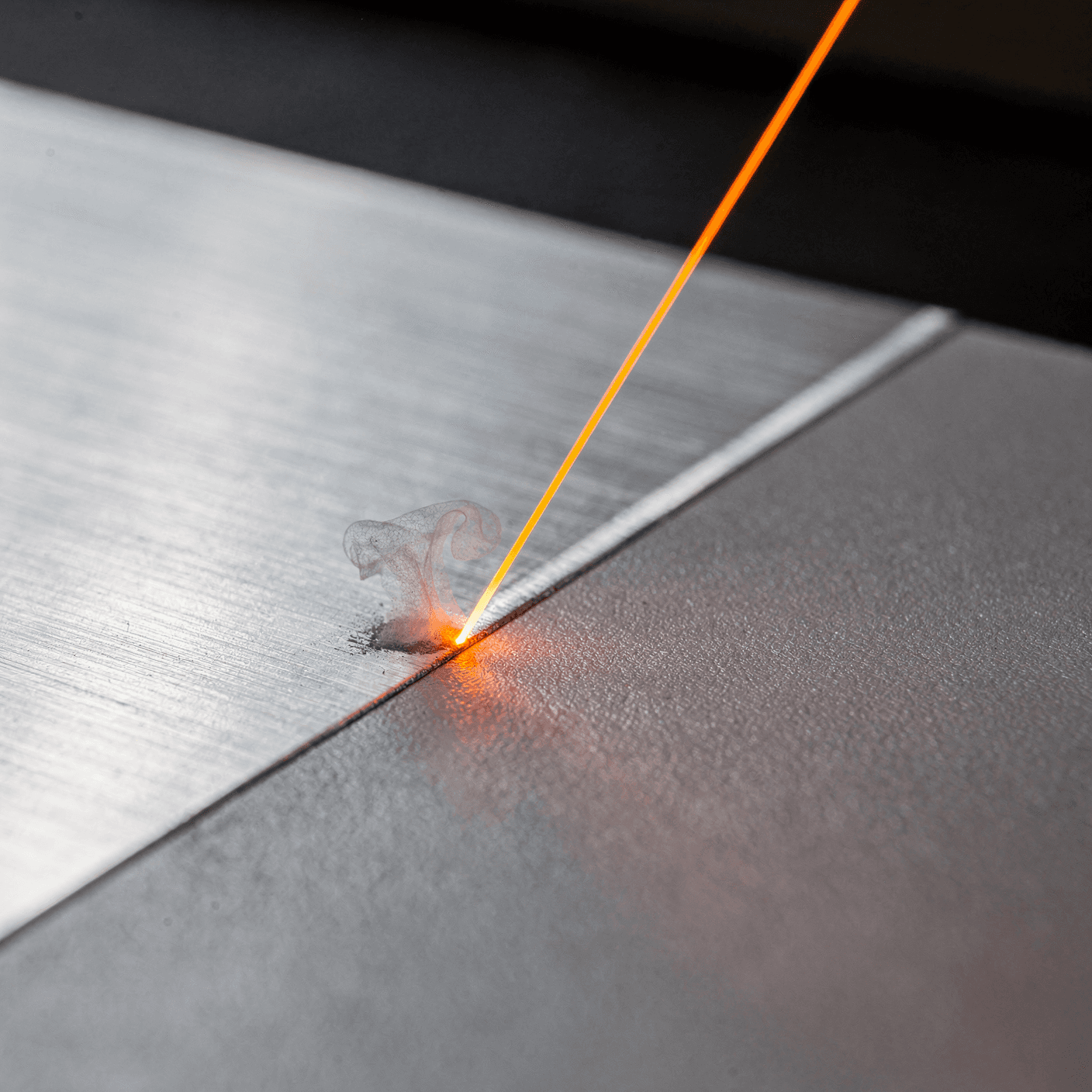
The Science: Why It Works on Aluminum
Aluminum reflects 1064 nm fiber-laser light; paint and oxide absorb it. That asymmetry is why the process self-limits at the substrate — and why peer-reviewed research at 5 J/cm² shows complete coating removal and improved corrosion resistance compared to mechanical methods.
Explore Technology →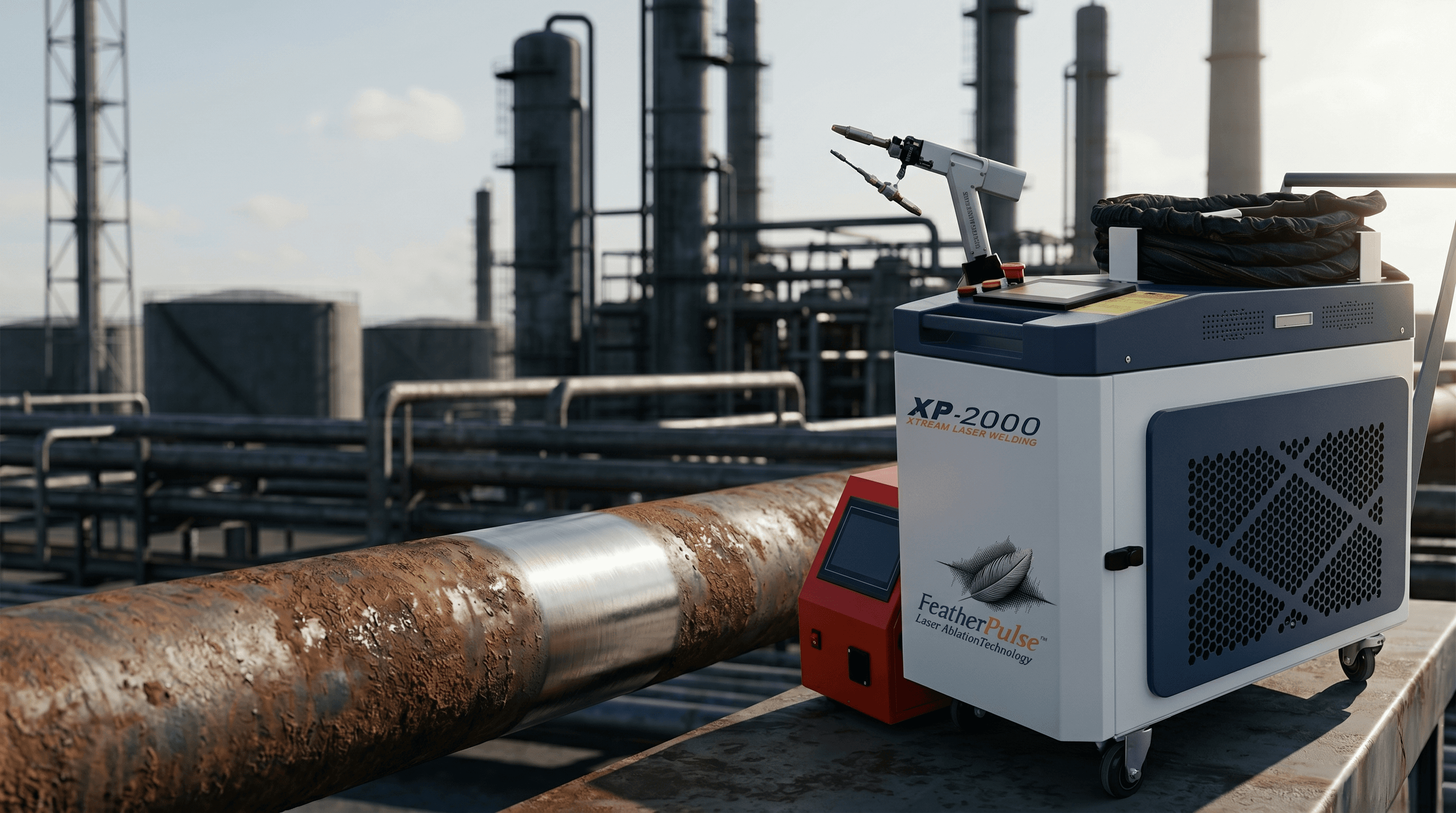
Applications, Parameters & Compliance
Parameter ranges for pipeline, scale, wax, coating, and weld-prep work; performance metrics; regulatory alignment; and illustrative deployment scenarios across pipeline, offshore, and refinery environments.
Explore Technology →