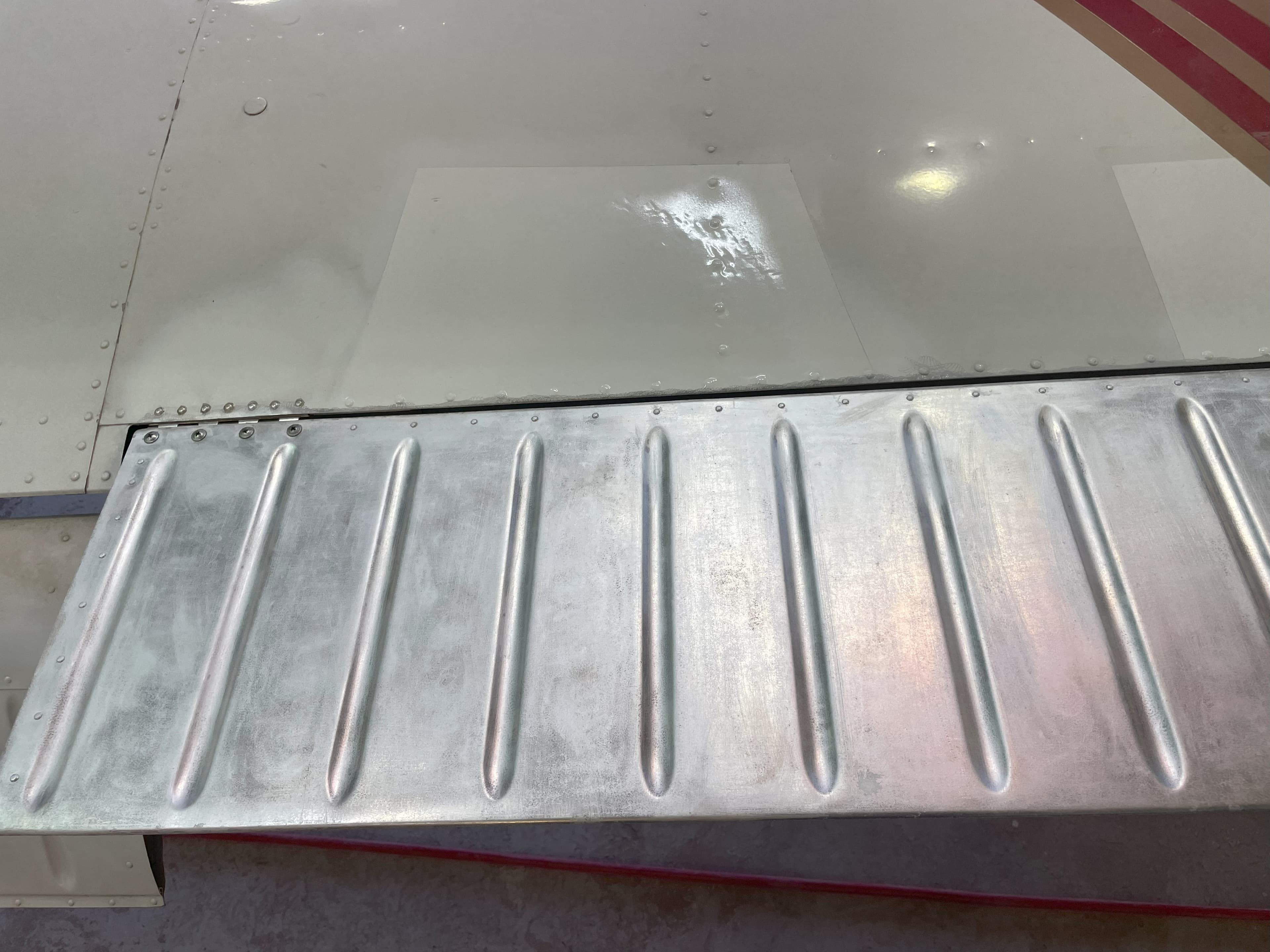
Aircraft Paint, Corrosion & Rivet-Area Restoration
Strip primer, topcoat, and corrosion from aluminum control surfaces, expose hidden damage around rivet lines, and clear surfaces for IA inspection — without media, chemicals, or fretting-fatigue risk. Validated against the 6 J/cm² substrate-damage threshold.
The aviation problem
Chemical paint strippers expose technicians to methylene chloride, benzene, and other toxic chemicals and generate hazardous waste that requires special disposal. Media blasting embeds grit in lap joints and around rivets, creates airborne particles, and reduces material thickness around critical fasteners. Aggressive sanding has its own failure mode: it can grind down rivet heads, reducing the clamping force the fastener can exert and compromising the joint.
None of these methods let an IA inspect the bare substrate the same shift the coating comes off.
The FeatherPulse approach
A pulsed fiber laser delivers controlled energy that's absorbed by the coating — not the aluminum. The coating vaporizes through three documented mechanisms:
- Ablation gasification — the coating absorbs energy and vaporizes directly
- Vibration stripping — rapid thermal expansion breaks the bond between coating and substrate
- Explosion stripping — trapped air or moisture in the coating rapidly expands, popping the coating off
The exposed aluminum is left in the Ra 0.8–1.6 μm roughness band — the sweet spot for re-coat adhesion. The substrate stays below 120 °C throughout the process.
Validated capabilities
- Control surface paint removal — ailerons, elevators, rudders, flaps
- Corrosion exposure on wing skin lap joints, hinge areas, and around rivets — surfaces that media blasting often hides or makes worse
- Rivet-area work without fretting-fatigue risk — verified at the 5 J/cm² operating point
- Clad-layer preservation — cross-section microscopy confirms the protective aluminum cladding remains intact
- Immediate NDT — no chemical residue, no media to clean up; dye penetrant and magnetic particle inspection can proceed without rinse-down delay
Regulatory context
The technique aligns with AC 43.13-1B (Acceptable Methods, Techniques, and Practices — Aircraft Inspection and Repair) for surface preparation. Aircraft owners and IAs using FeatherPulse equipment track FAA Service Bulletin compliance and repaint cycles through the AdaptAero portal.
Related Technologies
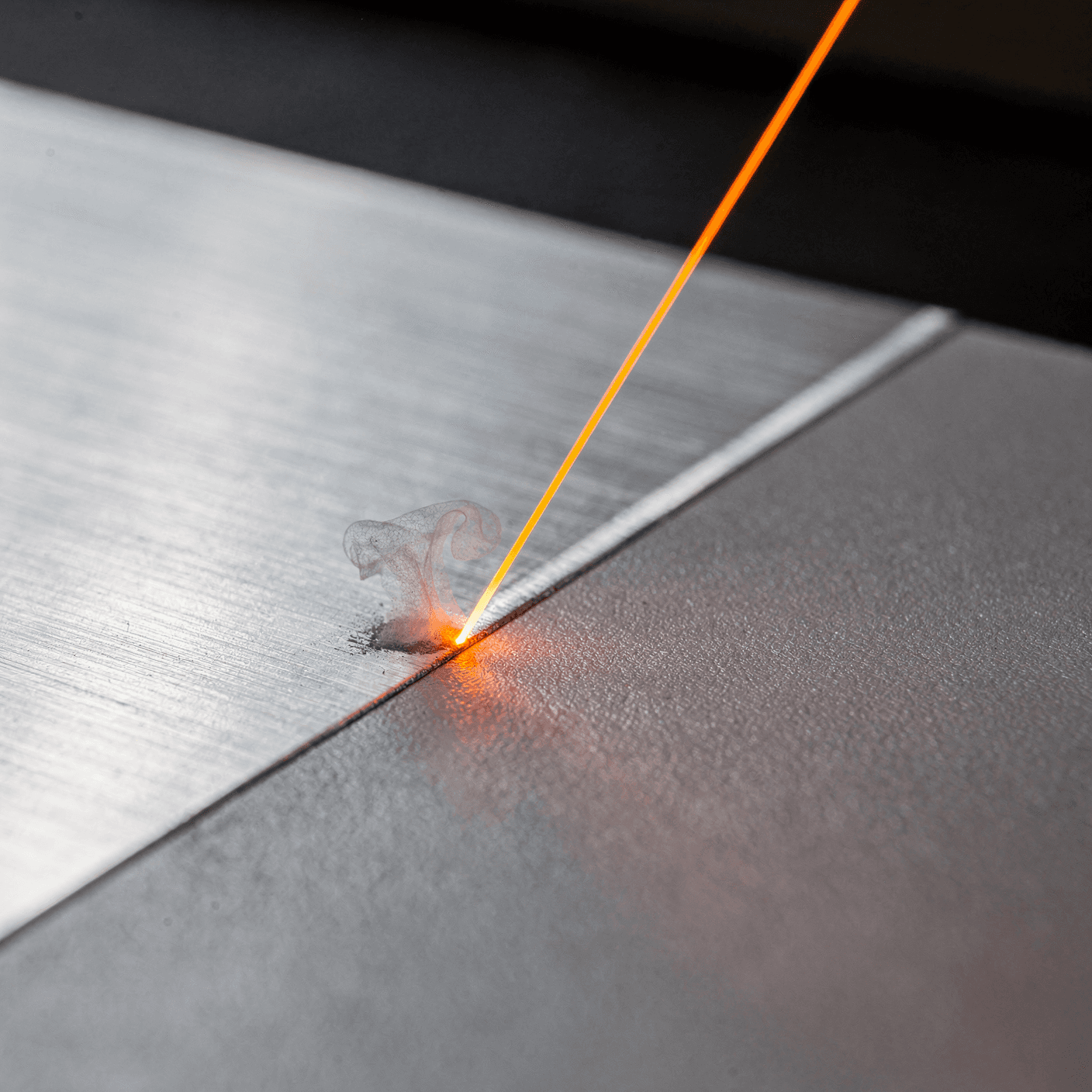
The Science: Why It Works on Aluminum
Aluminum reflects 1064 nm fiber-laser light; paint and oxide absorb it. That asymmetry is why the process self-limits at the substrate — and why peer-reviewed research at 5 J/cm² shows complete coating removal and improved corrosion resistance compared to mechanical methods.
Explore Technology →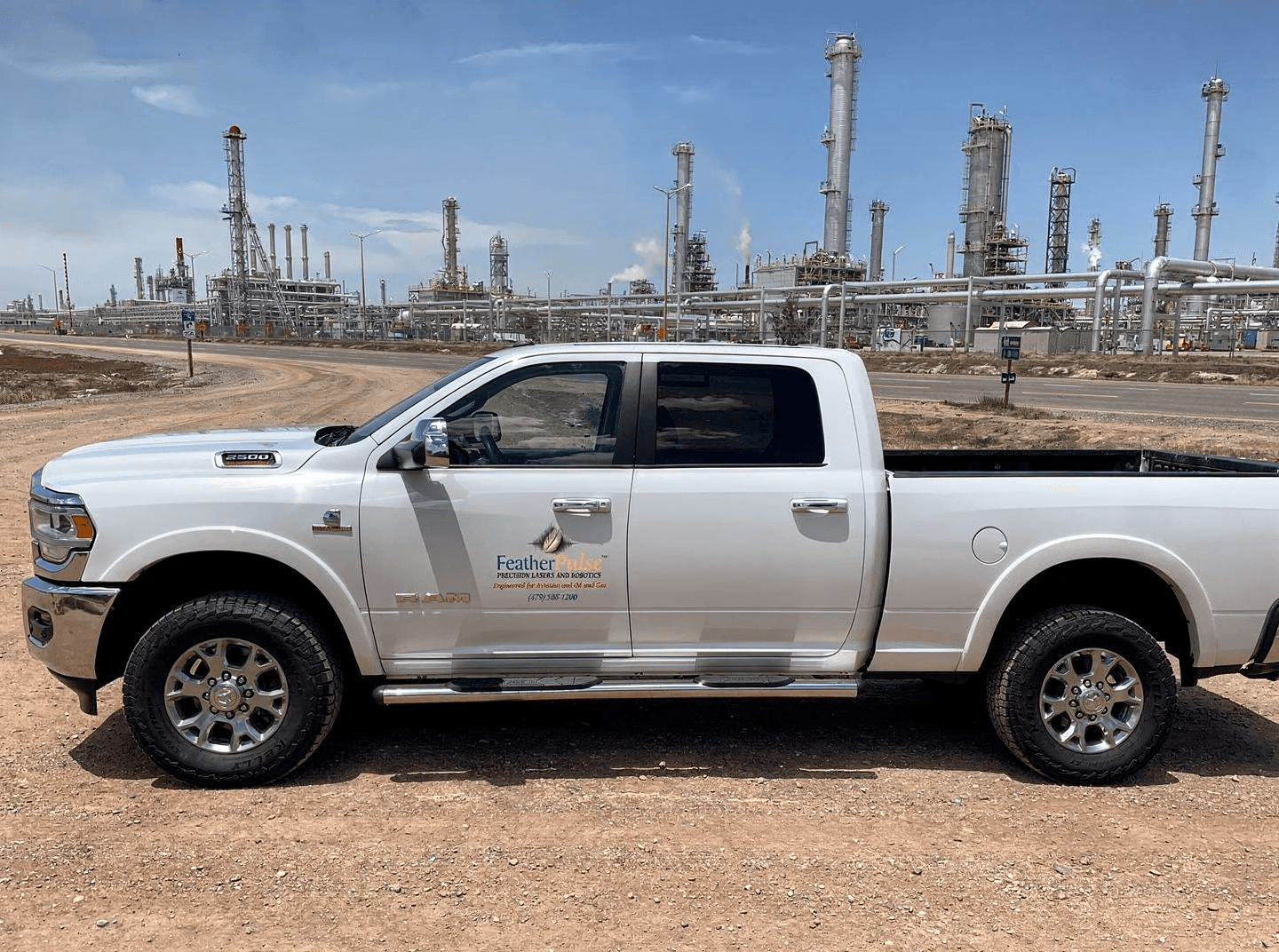
Pipeline & Infrastructure Maintenance
Strip corrosion, scale, wax, and coatings from pipelines, platforms, and refinery equipment — without chemicals, water, abrasive media, or multi-day shutdowns. One operator, one machine, no hazardous waste stream.
Explore Technology →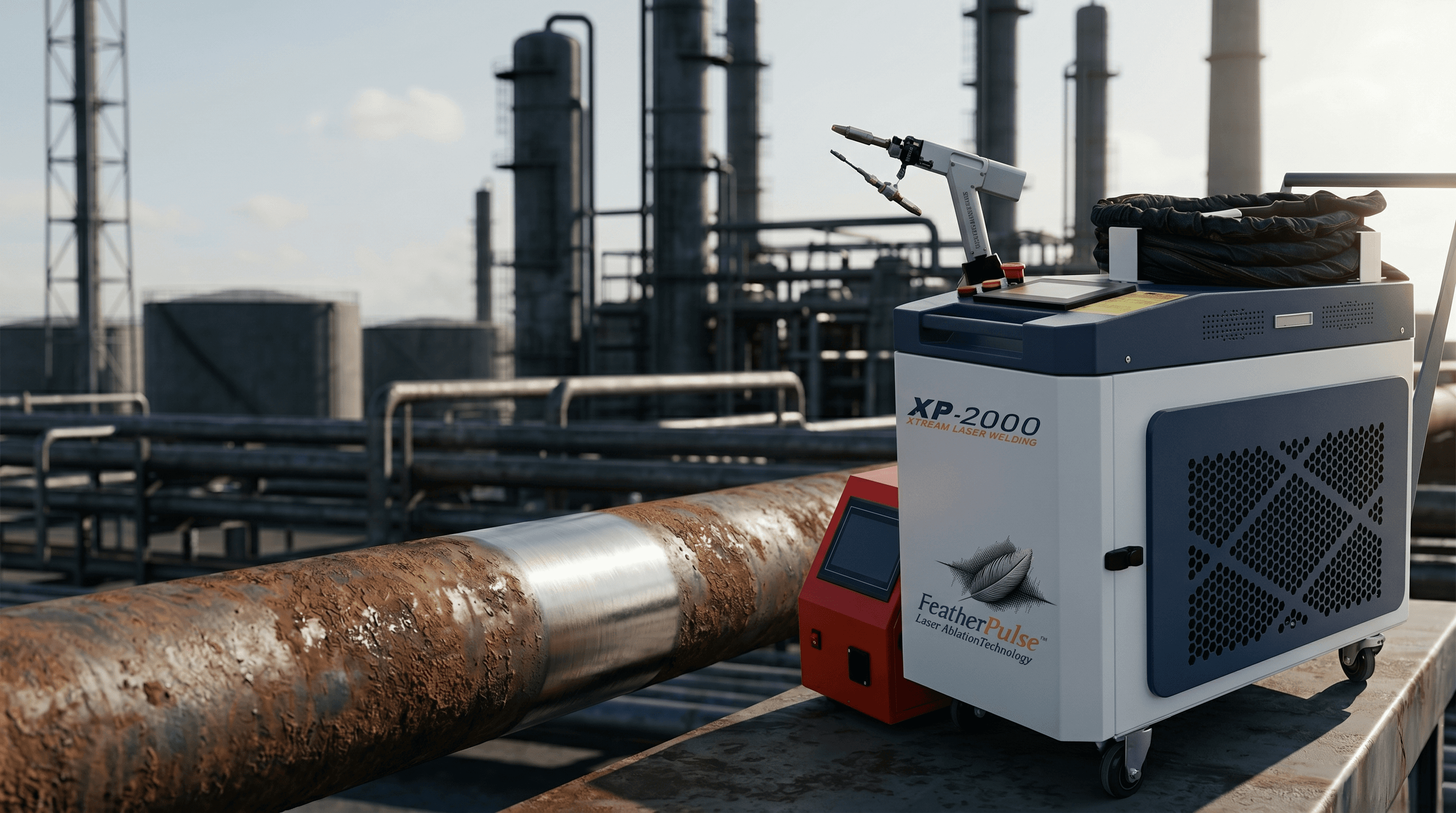
Applications, Parameters & Compliance
Parameter ranges for pipeline, scale, wax, coating, and weld-prep work; performance metrics; regulatory alignment; and illustrative deployment scenarios across pipeline, offshore, and refinery environments.
Explore Technology →