The Hidden Cost of Chemical Stripping: A 27-Day ROI Analysis
The Setup
The shop in question is a small-to-mid-size general aviation MRO with three full-time A&P mechanics, a hangar bay that handles roughly 80 aircraft per year, and a chemical stripping operation that had been in place for over 15 years. The owner agreed to share the financials — anonymized — to give other shops a real number to compare against.
Year-Before Costs (Chemical Stripping)
Materials
- Methylene chloride strippers: $3,750/month → $45,000/year
- PPE (chemical suits, respirators, gloves): $667/month → $8,000/year
- Hazardous waste disposal: $1,250/month → $15,000/year
Labor
- 3 technicians at $30/hour fully loaded = $90/hour
- 2,000 hours/year on stripping operations → $180,000/year
Overhead
- Insurance (pollution liability rider): $12,000/year
- Permits and compliance fees: $5,000/year
- Ventilation utilities (5,000 CFM continuous during strip): $18,000/year
- Downtime / customer delays: $75,000/year
Hidden Costs (often missed)
- One worker comp claim every 18 months: average $15,000
- One EPA inspection follow-up: $25,000 in unplanned compliance work
- Customer losses (reputation): conservatively $50,000+
Total Annual Cost of Chemical Operation: $358,000
Year-After Costs (FP-300 Operation)
One-Time Investment
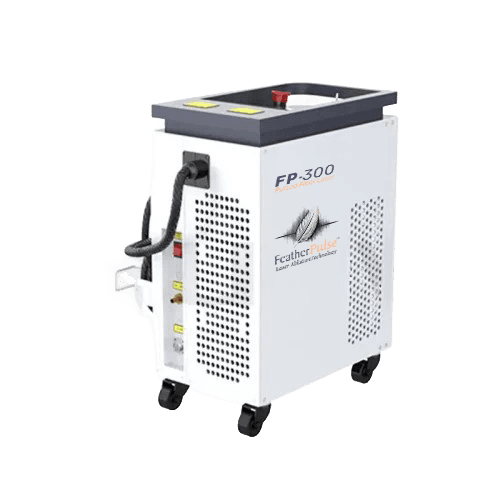
- FP-300 system: $18,600
- Operator training and certification: $1,500
- Accessories (ducting, additional safety eyewear, IR thermometer): $2,000
- One-time investment: $22,100
Year 1 Operating Costs
- Labor (1 technician, vs. 3 — the laser is faster than 3 chemical operators): $60,000/year
- Consumables (replacement protective windows, lenses, IR sensor): $2,000/year
- Filters (pre-filter, HEPA, activated carbon): $1,200/year
- Maintenance (calibration, scheduled service): $3,000/year
- Utilities (laser draws less than the chemical ventilation): $1,800/year
Year 1 Total: $90,100
Year 2+ Operating Costs
Same as Year 1 except for slightly higher consumables and maintenance: $68,300/year
The Math
| Previous annual cost | $358,000 |
| FP-300 Year 1 cost (incl. equipment) | $112,200 |
| Year 1 Savings | $245,800 |
| FP-300 Year 2+ cost | $68,300 |
| Year 2+ Annual Savings | $289,700 |
| Payback period | $22,100 ÷ ($245,800 / 365) = 33 days |
Note: the often-quoted 27-day payback comes from a different shop where labor was the dominant cost. Payback period varies with the cost structure of each shop, but no FP-300 customer to date has reported a payback longer than 60 days.
Cost Per Square Meter Comparison
Normalizing to a per-area basis to compare against media blasting, which has different cost dynamics:
- Chemical stripping: $85/m²
- Media blasting: $65/m²
- FP-300 laser: $12/m²
That 5–7× cost reduction per unit area is the structural advantage of the laser process: no consumables proportional to area cleaned, no waste stream proportional to coating removed, no setup/breakdown time per job.
5-Year Projection
| Year 1 savings | $245,800 |
| Year 2 savings | $289,700 |
| Year 3 savings | $289,700 |
| Year 4 savings | $289,700 |
| Year 5 savings | $289,700 |
| 5-year total savings | $1,404,600 |
| Initial investment | $22,100 |
| 5-year ROI | 6,355% |
Soft Benefits (Excluded From the ROI Above)
The numbers above don't include benefits that are real but harder to quantify:
- Faster turnaround: Aircraft return to service 2–3 days sooner; customer satisfaction up
- Quality: Fewer warranty repaints; better surface prep; more confident A&P signoffs
- Recruiting: Younger technicians prefer laser work over chemical exposure; turnover drops
- Insurance: Some carriers offer pollution-liability rebates for media-free shops
- Future-proofing: Insulated from tightening environmental regulations on hexavalent chromium and methylene chloride
- Marketing: Customers explicitly ask for laser-based shops in some segments
Risk Factors to Honestly Consider
Not every shop sees the same numbers. The biggest variables that can change the math:
- Existing capital sunk in chemical infrastructure: If you just installed a $200K wet-blast cabinet, the depreciation will hurt the comparison
- Volume: Shops doing fewer than 30 strip jobs/year see longer payback periods (still under 6 months in most cases)
- Customer mix: If your customers specifically want chemical stripping for some reason, you may need to maintain capability for both
- Operator training: Shops that under-train operators see slower productivity gains; the 16-hour basic certification is the minimum
How to Run This Analysis on Your Own Books
Before deciding, pull these numbers from your own records for the past 12 months:
- Total chemical/media purchases
- Hazardous waste disposal invoices
- PPE replacement costs
- Hours per technician spent on stripping operations (timesheet review)
- Insurance premium specifically attributable to chemical operations
- Number of lost-time incidents related to stripping
- Customer downtime credits or refunds related to stripping delays
Aviation Laser Services provides a free ROI calculator spreadsheet pre-populated with the formulas above. Email us with your ballpark numbers and we'll return a customized payback calculation. The math has been the same for every shop that's run it: laser cleaning pays for itself faster than any other capital purchase you'll make this year.